

Each of us wants to see our child confident, active, and successful. And although we often focus on grades or extracurricular activities, the main foundation of this success is health.
A straight back is not only about appearance or the proper functioning of the heart and lungs. It is the true foundation that supports our entire skeleton. When the spine is in its natural position, the load on the joints and intervertebral discs is distributed evenly, protecting them from premature wear and future pain. In addition, correct posture is the basis of a strong muscular corset: when the back is straight, the muscles work harmoniously, without overstrain on one side and weakness on the other. In orthopedics, everything is interconnected, so a healthy spine helps prevent pelvic tilt and foot problems, ensuring a light gait and energy for the whole day.
Simply put, spinal curvature is a change in its natural position, and if it is not noticed in time, it can become a serious problem in the future.
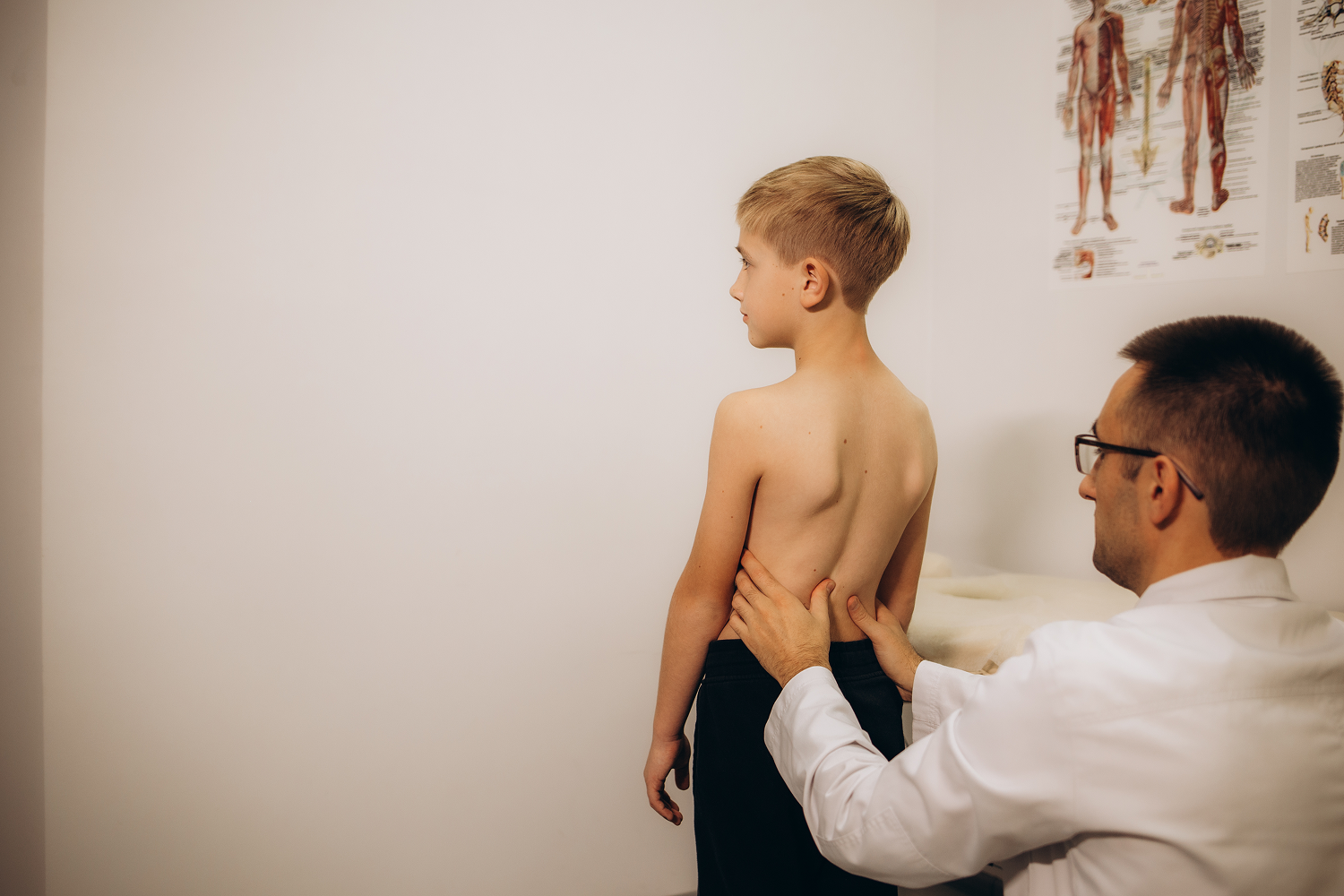
Types of scoliosis
When a doctor says “scoliosis,” it means that a child’s spine has begun to curve sideways, although it should be straight. There are different types of spinal curvature, and parents do not need to learn their medical names, but it is useful to know the main differences.
Sometimes the spine curves to one side, resembling an arc (the letter C). In other cases, it makes a double curve, similar to the letter S. Most often, problems arise during periods of intensive growth—between the ages of 6 and 15. The earlier we notice these changes, the easier it will be to help the child’s body return to the “correct settings.”
Causes of scoliosis
Why does the back begin to “sag”? There can be many reasons. Sometimes it is heredity, but much more often the cause is our modern lifestyle. Children spend hours sitting at desks or with phones in their hands, heads tilted forward. The back muscles are still weak, they cannot withstand such static strain and begin to give in.
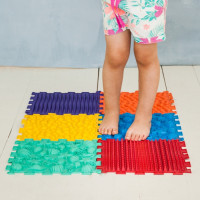
Heavy backpacks worn on one shoulder, improperly selected footwear, or even the habit of sitting with one leg crossed over the other—all these are building blocks of posture. The body is a unified system where everything is connected. For example, how a child places their foot directly affects how they hold their back.
Symptoms of scoliosis: how to detect it
It is important not to wait for complaints from the child, because in the early stages scoliosis does not cause pain. Parents should periodically perform a simple home check. Ask the child to stand straight with their back to you. Here are the main signs of scoliosis to watch for:
- one shoulder appears higher than the other.
- the shoulder blades are at different heights or one shoulder blade protrudes more.
- the distance from the arms to the waist is not the same on both sides.
If the child bends forward with arms hanging down, you may notice that one side of the back appears higher than the other. If you see anything like this, the first thing to do in case of scoliosis is to consult an orthopedist for professional diagnosis.
Prevention of scoliosis
The best treatment is the one that was avoided. Prevention does not begin with exercises, but with how a child walks and what they sleep on. The spine is the pillar, and the feet are its support. If the support “collapses,” the pillar will not stand straight either.
Children’s orthopedic footwear must be of high quality, and this is critically important. For example, good winter boots should not only keep feet warm but also properly fix the heel. Even if a child wears regular sneakers, we recommend buying children’s orthopedic insoles, which help distribute the load evenly.
It is equally important to arrange a proper sleeping place, because it is at night that a child’s body recovers the most. And while a pillow is responsible for the correct position of the neck, the mattress is the main support for the entire spine. In cases of scoliosis, it must be moderately firm. A mattress that is too soft creates a “hammock effect,” causing the back to sag, while the muscles, instead of resting, are forced to remain tense all night. The right mattress supports the natural curves of the body, allowing the spine to remain straight. You can learn more about how to choose an orthopedic pillow for a child to create ideal conditions for healthy growth when combined with a good mattress.
Exercises for scoliosis
Movement is life for the spine. Physical activity strengthens the muscular corset that keeps the bones in place. Exercises for scoliosis in children should be regular and обязательно coordinated with a specialist to avoid harm.
Usually, a set of exercises for scoliosis includes swimming, strengthening the abdominal muscles, and gentle stretching. This should not be exhausting training, but rather a daily healthy habit.
Many parents ask how to treat scoliosis at home. In addition to exercises, it is important to properly organize the workspace. Use orthopedic seat cushions that support the lower back—this significantly reduces fatigue during studying.
It is important to understand that the consequences of scoliosis are not only visual defects. They can include headaches, rapid fatigue, and even breathing problems in adulthood. But if a child wears proper footwear and does simple exercises, their back will say “thank you” many years later.
Take care of your child’s posture today together with Olvi, and let every step your child takes be light and confident!