Insoles for Children


Orthopedic insoles for children: advantages
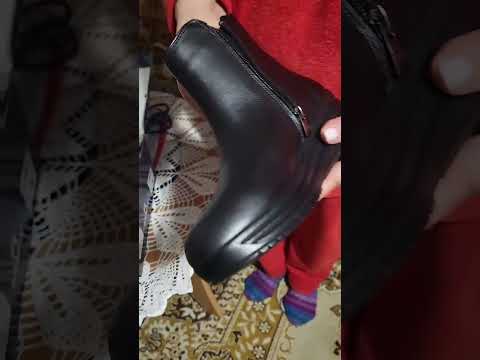
Orthopedic insoles for children can be an alternative to orthopedic shoes for the prevention of foot deformities or correction of an existing diagnosis. Especially in cases where the child wears models that by definition cannot be orthopedic - say, stylish fashionable ugg boots or rubber boots with favorite cartoon characters. Such shoes have an absolutely flat insole, without physiological bends, and the foot, deprived of support in the form of bulges and depressions in the right places, risks acquiring a deformation in the form of flat feet, valgus, etc.
Orthopedic insoles for a child are a real find even if the child completely refuses orthopedic shoes. Of course, over time, you will definitely persuade him. But as a launching pad in the beginning fight against the same flat feet or in preventive measures so that this very flat feet does not appear in your life, insoles are effective and really work in the right direction.
What types of orthopedic insoles are there for children?
There are several classifications of corrective and preventive insoles:
- by material;
- by shape;
- by indications.
Orthopedic insoles can be made of materials such as:
- genuine leather;
- gel;
- latex;
- silicone;
- medifoam (elastic hypoallergenic foam);
- cork (cork oak bark);
- EVA (composite polymer), etc.
The materials can be combined, for example, the top layer of the insole is made of leather, and the arch support is made of PVC or latex, etc.
Orthopedic insoles also come in different shapes. There are full-size insoles, half-insoles, insole under the heel, etc.
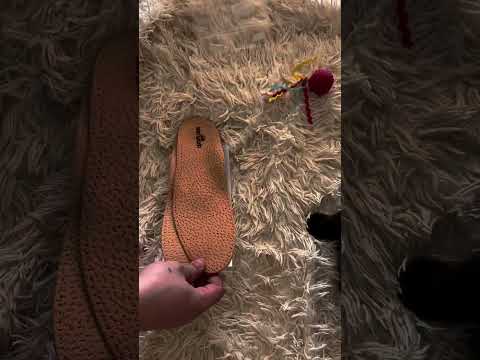
Children are often given insoles with a transverse-longitudinal arch support, which are designed to correct and prevent flat feet, since this is the most common type of foot deformation. The combined insole provides effective support for the transverse and longitudinal arches of the foot. While wearing them, it makes sense to do additional gymnastics for the feet. Then the muscles and ligaments are strengthened, and as a result, the position of the feet is aligned and does not worsen in the future. If there is no diagnosis of "flat feet", then the insole serves as an excellent preventive measure, preventing its occurrence.
When should orthopedic insoles be worn?
There are two options when wearing such insoles is required. The first is prevention. In this case, wearing insoles is not necessary, but very commendable. The insole here is designed to prevent a potential violation in the development of the feet.
The second option is already a necessity, supported by a diagnosis. And then wearing the insole should be strictly observed.
It is ideal to put the insole in shoes that do not carry an orthopedic load - ski boots, roller skates, bowling shoes, ugg boots, rubber boots, ballet shoes. For such shoes, most likely, there are no corrective versions, so why deprive yourself of the pleasure of having a good time or showing off in a new outfit if you can easily use insoles?
Or, perhaps, children's orthopedic shoes the child does not have them yet, but there are other, new ones, but not quite right. And here the insole will come to the rescue and provide physiological support for the foot.
Where to buy children's orthopedic insoles?
You can buy children's orthopedic insoles in this section of our online store of orthopedic goods OLVI.UA. Before buying, it is recommended to consult an orthopedic doctor.
Our consultants will be happy to help you decide and choose exactly the model with which your child will be comfortable wearing his favorite shoes.
Orthopedic insoles for children (Odessa)
For those who live in Odessa or are passing through this city - you can visit our offline store, together with your children. Our specialist will consult you on all issues.
How to wear orthopedic insoles correctly?
- When you put the insole in the shoe, the shoe should not become extremely tight.
- If the insole, which is originally provided by the manufacturer in the shoe, has an anatomical relief, then it is not advisable to use such an insole together with the orthopedic one.
- The insole must match in size. It is unacceptable for the insole to move inside the shoe: this way the arch support will not provide support for the foot in the right places.
- The most important rule, which we never tire of telling you about, is comfort. And it applies equally to both corrective shoes and insoles. It is imperative that the child is comfortable walking in shoes with an insole placed inside. Pain, rubbing, pressure – these factors are not acceptable.
Yes, perhaps some discomfort will be felt during the first day: the foot, usually not supported by anything, is spread out in the shoe, and the foot, already accustomed to this position, is comfortable. The insole will feel like some unevenness, as if you were walking on bumps.
However, the initial discomfort should pass, and the insole will begin to work, removing deformation or preventing it.