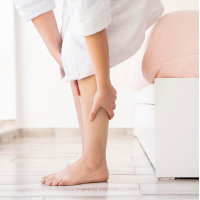



Anyone who has ever woken up in the middle of the night from a sharp, piercing pain in the calf knows this feeling: at that moment, the world stops existing. There is only you and your leg, which has literally twisted into a “knot.” It feels as if the muscle has taken on a life of its own and decided to turn into stone.

Leg cramps: what they are
Simply put, a cramp is a sudden and uncontrolled spasm. Our brain sends a signal to the muscles to “contract,” but for some reason forgets to send the signal to “relax.” As a result, the muscle freezes in a state of maximum tension.
Most often this happens in the calf muscles, but sometimes it “grabs” the foot or toes. Many people are frightened by the question: why does a leg cramp occur so suddenly? In fact, it is not a disease, but a loud signal from our body that something is missing or that it is simply very tired.
Causes of leg cramps
When trying to understand why leg cramps become frequent visitors, doctors highlight several key factors. Sometimes the reason is obvious—for example, you spent the whole day on your feet in uncomfortable shoes or overdid it at the gym. The muscles become overtired, metabolic byproducts accumulate in them, and at night they openly “take revenge” on us for such a marathon.
Another common cause is a deficiency of trace elements. Magnesium, calcium, and potassium are the main “conductors” of muscle relaxation. If you drink little water, overuse coffee, or simply eat an unbalanced diet, electrolyte balance is disrupted and the muscles start to misbehave. It is also worth paying attention to blood circulation: if the vessels cannot cope with the load, the tissues do not receive enough nourishment, which also leads to spasms.
What to do for leg cramps at home
When pain strikes unexpectedly, it is important to know how to relieve leg cramps quickly and without panic. The first rule is not to resist the pain, but to gently stretch the muscle. If your calf has cramped, pull the toes of your foot toward you. You can do this with your hands or throw a towel over your foot and gently pull. Yes, it will hurt at first, but after 10–20 seconds you will feel the “knot” begin to loosen.
A change in temperature also helps: apply something cold or, on the contrary, rub the leg with something warming. At Olvi, we know that self-massage becomes an excellent helper in such moments. If you have a set of massage balls at hand, simply roll them with your foot or ask someone close to gently work on the calf. This will help the muscle “remember” how to relax. Understanding how to treat leg cramps at home begins with simple yet effective techniques like these.
How to get rid of leg cramps
To forget about the problem for a long time, you need to act comprehensively. First, review your drinking habits and shoe choices. Second, give your legs proper rest. What helps most effectively against leg cramps is daily stimulation of blood circulation.
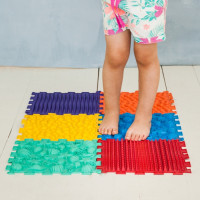
Orthopedic mats work wonderfully, as they imitate walking on sea pebbles or uneven surfaces. Just 5–10 minutes in the evening walking on such a puzzle mat is enough to relieve daytime tension and “unload” your feet. This simple habit replaces a full massage session and prepares your legs for a calm sleep.
Let us answer a common question: why are frequent night leg cramps dangerous? By themselves, spasms are just a symptom. But if they are accompanied by swelling, changes in skin color, or a constant feeling of heaviness, this may be a sign of varicose veins or vascular problems. In such cases, it is better not to postpone a visit to a doctor.
Folk remedy for leg cramps
Our grandmothers knew their secrets. One of the most popular folk remedies is a warm foot bath with sea salt before bed. Salt relaxes muscles perfectly and also helps replenish magnesium deficiency through the skin. Another old method that everyone has heard of is pricking the cramped muscle with something sharp (such as a needle or pin), but we advise caution. It is much safer and more pleasant to rub the leg with apple cider vinegar or mustard oil—the gentle warmth quickly relieves residual discomfort after a spasm.
Exercises for leg cramps
Prevention is everything. If you want to strengthen your muscles and make them more elastic, add a couple of simple exercises to your routine. You can use a yoga or fitness roller: gently roll your calves and the back of your thighs on it. This is a great way to stimulate lymph flow and eliminate stagnation.
It is also ideal to buy a foot massager or use special spiked massage balls. Simply rolling the ball from heel to toe in the morning and evening can work wonders for your well-being.
Sometimes after intense exertion or old injuries, the leg needs special support, such as a foot orthosis, to stabilize the joint and allow the muscles to recover in the correct position. It is important to remember that the principles of physical rehabilitation after injuries always include a gradual approach and attention to detail. If cramps have been bothering you for weeks, this is definitely a reason to consult a specialist to rule out serious deficiencies or hidden conditions.
Take care of your legs, pamper them with massage and comfortable shoes, and may your dreams be colorful and pain-free!