


«How to choose quality shoes» - this is the question that buyers are increasingly asking themselves when choosing new clothes. As a rule, shoes are an important element of each person's style. It's good when shoes really look beautiful and expensive. But their comfort and quality are no less important. This article will help you make the right choice when buying new clothes. First, you need to decide what kind of shoes you need: for everyday wear, special or medical and preventive (orthopedic). It is also worth deciding on the material: natural (leather, nubuck, suede, etc.), artificial materials... It is clear that choosing shoes made of natural leather is preferable to artificial analogues, because the leather "breathes" in it, and your feet do not get tired and sweat so much.
So, what should you pay attention to when choosing shoes?
1. Common mistake. The most common mistake is to stop your choice exclusively on promoted, branded shoes. As you know, the more popular and well-known a particular brand is, the more often it will be counterfeited. And the quality of such "dummies" leaves much to be desired. Try to buy shoes in branded stores that have all the relevant certificates (for example, our Olvi store has all the necessary documents and certificates for its products). Buying "branded" shoes at spontaneous markets will most likely end in failure for you.
2. Leather. Naturally, the best material for the upper part of shoes is considered to be genuine leather. If you have decided to buy leather shoes, then you should highlight several points. In practice, it is very difficult for the average buyer to distinguish genuine leather from leatherette. It is in such cases, when you doubt "is this leather footwear?", that you need to look for the very essence, i.e. the cut: a cloth-oilcloth base is a sure sign that the shoes are not made of genuine leather. Another point - shoes made of thin leather. Please note that such footwear is not intended for everyday wear and quickly loses its original shape and appearance.
3. Stitched or glued? Today, most stores and markets are simply littered with glued footwear. Gone are the days when you could easily choose high-quality stitched footwear that would serve customers for years. But today we must admit that glued footwear (sandals, shoes) can also be durable and high-quality. When choosing such footwear, it is very important to pay attention to the joints of the base and sole. Upon detailed inspection, it is quite easy to identify low-quality footwear.
4. Inner lining of footwear. A very important point when choosing a new pair for yourself or your child is to examine the "insides" of the footwear. The back and insole should be made of leather or natural pile material. There should be no folds on the backs and insoles. But synthetic foam mesh (usually on sports shoes or boots) is not the best option, because it is not a durable and practical material.
5. Size. There are two most common and often fatal mistakes when choosing shoe size.
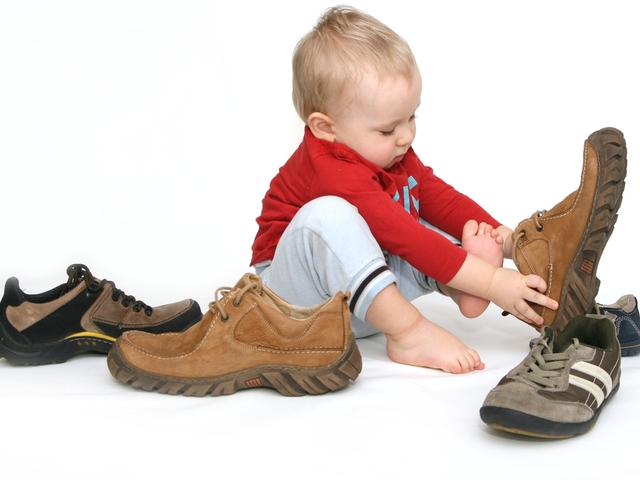
The first mistake is buying your child shoes "for growth" several sizes larger. Yes, you can buy shoes with a little space for growth. But buying shoes that are too big is fraught with the development of foot deformities. Also, in the case of excessively large shoe size, there is an increased risk of catching on an obstacle with a too long sole/toe of the shoe.
The second mistake is women buying shoes of the wrong size, usually smaller. There can be many reasons: "it's a very beautiful model, but the size was just smaller", "so what if the size is smaller, but it's so cheap", or "I'll only wear it when going out, I'll put up with it. It doesn't matter that it's smaller". Wearing shoes of the wrong size leads to foot deformations, poor posture and other troubles.
These are the basic recommendations for choosing shoes. If you follow them and pay due attention to each moment, then your choice will be correct.
Happy shopping!

 Share
Share


 Subscribe


