


Do you know that familiar feeling when, after a delicious lunch or an evening coffee with a cupcake, a burning sensation starts deep in your chest? It feels like a small flame gradually intensifies, rising all the way up to your throat. You try to wash it down with water, eat something, or simply wait it out, but the discomfort doesn’t go away. In everyday language, this is called heartburn, but medically, heartburn is a signal that your stomach and esophagus are not working in perfect harmony. It is not just a minor inconvenience but a symptom that should not be ignored, as it directly affects our quality of life, mood, and even sleep. The Olvi team decided to explore this topic in more depth so you can help yourself and finally forget this burning sensation.

Causes of heartburn
First, let’s understand where this “fire” comes from. Our body is very intelligently designed: between the esophagus and the stomach there is a special valve — the sphincter. It works like a one-way door: it lets food in and immediately closes to prevent stomach acid from coming back up. But sometimes this “door” starts to malfunction. The main cause of heartburn is weakness of this valve. When it does not close tightly, stomach contents along with aggressive acid flow back into the esophagus. Since the esophageal lining is not designed for such a chemical attack, irritation occurs, which we feel as burning.
There are many reasons for this behavior. It may be a love for overly spicy, fatty, or fried food. Heartburn often appears after lying down immediately after a heavy dinner — gravity simply no longer keeps the acid down. It can also be influenced by bad habits, excess weight that puts pressure on the abdominal cavity, or even a tight belt. Stress can also be a trigger, as our digestive system is very sensitive to emotional states.
Signs of heartburn
How do you recognize it? It usually starts with a burning sensation behind the breastbone that may rise up toward the neck. Sometimes a sour or bitter taste appears in the mouth — as if you just ate a slice of lemon, even though you didn’t. You may also experience a “lump in the throat,” difficulty swallowing, or even a persistent dry cough that lasts for weeks. Many people confuse this pain with heart pain, but if symptoms worsen after eating or while lying down, the stomach is most likely the cause.
GERD symptoms
If heartburn occurs more than twice a week, it is a reason to pay attention. In medicine, there is a condition called gastroesophageal reflux disease (GERD). To put it simply, GERD is a chronic condition in which acid reflux into the esophagus becomes regular and starts damaging its lining. Understanding how to treat GERD begins with identifying its symptoms.
The main symptoms of gastroesophageal reflux disease — what are they? It is not only constant heartburn but also belching of air or stomach contents, excessive saliva production, or even a hoarse voice in the morning. It is important not to wait until the problem becomes more serious, as constant acid irritation of the esophagus is a real risk.
risk.




What helps with heartburn at home
Many people are used to drinking baking soda solution or taking antacids by the handful. However, soda provides only temporary relief, after which heartburn returns with renewed strength. Knowing what to do for heartburn at home can significantly improve your quality of life without unnecessary medication. Start by reviewing your habits: try eating smaller portions more often. Chew your food thoroughly — your stomach will thank you, as it will have less work to do.
Another secret of how to relieve heartburn without medication lies in hydration. A glass of warm water after meals can help “wash away” remaining acid from the esophageal walls. It is also important to give your body time to digest before sleep: eat dinner 3–4 hours before going to bed. If you notice that certain foods trigger heartburn (such as chocolate, citrus fruits, or coffee), try temporarily reducing them in your diet.
How to sleep with heartburn?
Sleep is the time when our body should recover, but for people with reflux, nights can often become a challenge. When we lie horizontally, it becomes very easy for acid to travel from the stomach upward. That is why many people ask: which side should you sleep on to avoid heartburn? Studies show that the left side is the ideal option. Due to the anatomical position of the stomach, when you lie on your left side, the stomach entrance is positioned higher than the acid level, preventing it from flowing upward. Sleeping on the right side, on the contrary, relaxes the sphincter.
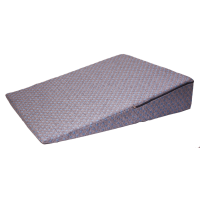
However, the left side alone is not enough. To let gravity work in your favor, you need to elevate the upper body. Regular pillows are not very effective here: they are either too soft or create unnatural neck bending, leading to pain. The best solution is a special wedge pillow. It has a unique shape that gently raises the shoulders and head at a 15–20 degree angle. This keeps the stomach below the esophagus, preventing heartburn.
If you are planning to buy an orthopedic pillow for sleep, pay attention to models designed specifically for reflux relief. Our catalog includes various options, such as wide models or adjustable-height pillows. You can learn more about how this accessory works in our article: “How to sleep with reflux: tips for a comfortable night”.
For those who value maximum comfort, the ideal choice is to buy a memory foam orthopedic pillow. This innovative material adapts to your body heat, does not put pressure on soft tissues, and allows the neck to fully relax. This is especially important because sleep can already be restless with GERD, so comfort should come first.
Remember that heartburn is not a sentence but rather a reason to pay closer attention to your body. Small steps — the right pillow, timely dinners, and awareness of your sensations — can work wonders. Everyone deserves mornings without pain and evenings filled with comfort.

 Share
Share


 Subscribe


